How To Create A Writer’s Retreat
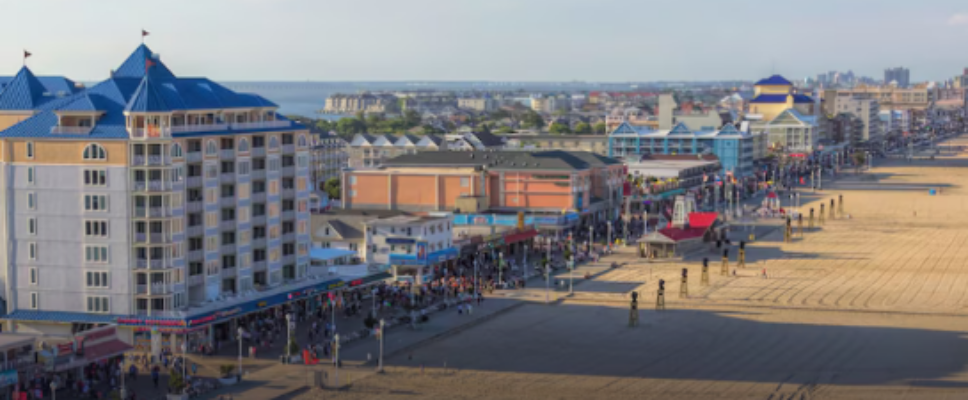
Teresa and I just came back from a week at Ocean City, Maryland, and I’m already miserable.
We wanted to create a writer’s retreat, so for six days and nights, we were together in a small condo. All we had were a few books, the work we wanted to do, a small stack of DVDs, and each other. No cats to care for. No chores to be done. No lawn to mow, no mail to take in, no phones to answer, no dishes that had to be washed, nor laundry to wash, hang out, take in, fold, and put away.
Now, it wasn’t six days of unceasing labor over our projects – a novel for Teresa, my nonfiction on the tropes used in detective stories. We visited the Delaware arboretum one day, and had lunch at a Chinese buffet with my in-laws another. It was more like five days, not counting the day we arrived, which involved unpacking, setting everything up, and getting dinner. We spent in all three and a half days working and the rest doing other things.
It was ironic that as the time approached to head south, I wasn’t that enthusiastic about going. I love seeing the ocean and walking the sand, but for some reason I had forgotten about how much I loved the place. I loved getting up early and raising the storm shutter that slowly revealed the sand, the ocean — churning or calm; hitting the shore at an angle or direct? – and feeling the mood of the ocean and sky.
But what also made a difference what the work I did. I was over 45,000 words into “Kill Like Christie and Solve Like Sherlock.” In between work on other books, I was scanning Agatha and Conan Doyle’s stories – as well as books by other classic mystery writers – and slowly building up the tropes they used. By the time we left, I had made significant progress on it, which gave me a boost of self-confidence I needed.
And now that we’re back at home and catching up on the household chores, I understood again the need to protect your time and putting words on paper. Yes, it’s important to do the social media. Yes, I’m supporting Teresa on her “Jane Austen, She Watched” project, watching the movies, talking about them, editing her work, and gathering the art for the book. There’s also repairs and improvements needed to the house; a roller screen to be repaired, a wider desktop for her desk, and kitchen cabinets to be installed. After a week of peace and productivity, I’m reminded how much work I have to do, and how much time I waste in unproductive stuff (almost all of which is online).
If you’re feeling overwhelmed by your daily life, a retreat from it can revitalize the love for telling stories that got you here in the first place. It’s possible to make concrete progress on your work that’ll leave you energized instead of enervated.

Types of Writers’ Retreats
But not all writers’ retreats are the same.
There are the ones sponsored by a writing group, podcast, or organization. They sound like fun. Who wouldn’t want to spend a week in a Scottish castle, maybe to fuel your Highlander romance? Or a cruise around the Caribbean. Imagine participating in classes during the morning and touring the islands in the afternoon, and having your meals (and the clean-up) taken care of?
Then, there are the writers’ colonies like Yaddo. If you’re accepted into one, you get a room (or cabin) of your own. Lunches are left on the porch. In the evenings, there’s poetry readings and literary talk.
Now, there’s nothing wrong with that. I wouldn’t do them. For one thing, if I paid a lot of money (and you have to pay your own way to get there, plus the cost of the stay – more if you’re on a cruise), do I really want to be cooped up in a room? If I’m in Hawaii staying at the North Shore Hilton at Turtle Bay, I’m more interested in exploring the island and learning to surf and work on my tan!
If you want to play at writing, if you feel you need the support network and validation of spending a lot of money, well, that’s up to you. If you come back with happy memories and no words on the page and you’re fine with that, great!
But if you want a productive retreat in a place with few distractions, check out a resort town in the off-season within driving distance of your home.
That’s what we did. We went to Vrbo and scrolled through the offerings. We wanted a small condo with a balcony that fronts the ocean. We didn’t want to be a block or two away. We didn’t want one that fronted the bay. I wanted to be able to step away from the table, go out on the balcony, and stare into the limitless horizon.
Our ideal haven was on the north part of Ocean City, far away from the Boardwalk to the south. It was more ideal than we expected; it was a short walk away from a grocery store. We could finish our work for the day, walk across the street, buy a sandwich, wrap, or salad, hummus and chips, and even dessert! Teresa loved buying a different slice of cake each day.
In the fridge and cabinets, we had oatmeal for her breakfast; and apples, peanut butter and yoghurt for mine. We also had coffee and tea for when we needed it. Throw in two laptops and reference books, and we were ready to write.
Here’s how you can do it, too.
Workflow: Create A Writers’ Retreat
1. Pick a destination and length
Where depends on your inclinations. Mountains or beaches? City or small town? It should be somewhere with few attractions to lure you away. Ideally, it should be within driving distance, to keep costs and hassles down.
As for length, I’d suggest a week. A weekend is too short. You’re tired the day you arrive, and you have to pack and clean up the day you leave. We stayed for a week the first time, and that gave us time to settle in, learn where everything is, and adjust to the new daily rhythm. It went so well that next time we’re shooting for 9 or 10 days.
2. Pick a place to stay
Hotel or short-term rental? If a hotel, make sure it has the working space you need, like a table and a few chairs. Imagine what it would be like to be in that room all day. If that bothers you, look for a library within walking distance where you have all the space you want. Google Maps is ideal for these kinds of searches.
I looked for short-term rentals through Vrbo, with Google Maps open in another window. Maps is also ideal for “walking” around the neighborhood to judge the quality of the area.
Look for a grocery store within walking distance. This not only gives you a welcome break at the end of the day, but you can buy ready-made sandwiches and desserts.
A slight disadvantage with short-term rentals is you may need to make a damage deposit. If you clean the place before you leave — sweeping the floors, wiping down the kitchen counters, straighten the furniture — your deposit should be refunded to you.
3. Pack intelligently
In addition to your clothes and toiletries, you may need to pack sheets, towels, and pillow cases (if you’re going to a rental). The owners should send you a list of what you need within a week of your stay.
Since this is a working vacation, you need to safely stow your laptop, pens, papers, manuscripts, and computer files. If you’re a writing couple, bring along a laptop for each.
And don’t forget a few books! You’ll have more time on your hand than you think.
4. Set goals
Knowing what you’re planning to work on before you go makes it easier to dive in when you get there.
Just don’t overload yourself with work. Focus on one story. If you want something else to do, consider a low-value but necessary job, like sorting through files, or outlining that idea that’s been in the back of your mind. This is the perfect opportunity to sit quietly, stare at the waves / trees / mountains / skies and dream up a story.
5. No internet (or limited internet)!
You’re not there to surf. Tell yourself “I’m not paying $1,200 to scroll Instagram when I could be doing that at home.”
Personally, I wouldn’t recommend doing that at the end of the day. I find it an empty exercise that chews up time.
Instead, bring along a few DVDs. Maybe a series you always wanted to get in to. Or Hollywood musicals. Or comedies. Something to take you out of yourself for a few hours and decompress.
6. Adjust to the New Normal
If you find yourself putting down words every day, that’s fine. Or perhaps you wrote for two days and ran out of gas on the third (or you’re feeling house-bound). Call that a rest day or half-day and go out! Just know the difference between working so hard that you’re brain-fogged, and your ego trying to “protect” you from fear of failure. You may have to be hard on yourself and keep pushing.
Final Words
With planning and research, we created a writers’ retreat that succeeded. We knew where we wanted to go beforehand, so it was a matter of finding the right location and setting it up. You may have to go on more than one to find out what works for you. Maybe a quiet spot drove you crazy. Maybe you need to be in a big city where you can feel the buzz of life all around you. Maybe you want museums to refresh you instead of landscapes.
Pick what works for you. And even if you don’t get any work done, you’ll return to your life feeling refreshed and happy.
Until the trash needs taking out.