Teresa Reviews Towards Zero (2025)
Teresa reviews Towards Zero (2025) and found the BBC production a beautiful but damp adaptation with a disappointing Audrey.
(c)2025 by Teresa Peschel
Fidelity to text: 3 golf clubs
 You’ll recognize most of the plot elements, despite them being sieved through a tennis racket and remixed.
Quality of movie: 3 golf clubs
The pacing often dragged, loose plot ends are everywhere, and I hated how Audrey behaved.
Read more of Teresa’s Agatha Christie movie reviews at Peschel Press.
Also, follow Teresa’s discussion of these movie on her podcast.

This makes the sixth adaptation of Towards Zero, of which I’ve seen five. That 1980 Italian film with English subtitles remains elusive. Sadly, despite the BBC’s efforts, the French version from 2007 remains the gold standard, although I’m fond of Miss Marple channeling Superintendent Battle in her version from 2007.
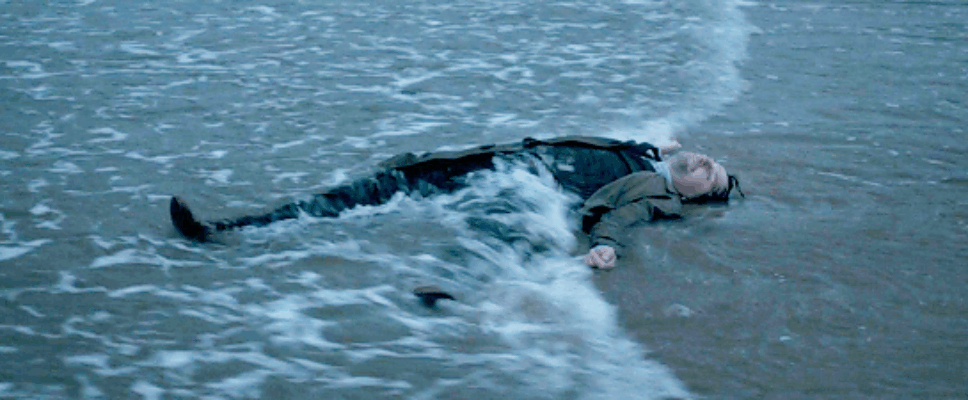
 As for this new version, scriptwriter Rachel Bennette and director Sam Yates wanted to drag Agatha into our brave new world. The cast is multicultural; the sex and language is considerably more graphic than what she wrote; and the scenes are washed in a monochrome color. If they’re going to do that, please make the story internally consistent. Don’t bring up important plot points that are then ignored, waste time showing the tides moving instead of the story, and make the characters act in character.
Apparently, that is too much to ask.
Agatha wrote Towards Zero during WWII and published it in 1944. While she always wrote contemporaries, she rarely tied a book to a historical event. Reading the novel, you’d never know a war was going on. The film changes the date to 1936 and you’d never know that war clouds are gathering on the horizon. The Gull’s Point crowd is intent on their own pleasures and troubles. The wider world doesn’t interest them.
We open with the sensational divorce trial pitting Nevile Strange against his wife, Audrey, over his relationship with the golddigger, Kay Elliot. Back in 1936, divorce didn’t just happen. You had to make an excellent case to the courts, even when children and estates were not involved. All parties, even if they agreed to it beforehand, would get dragged through the mud with gleeful, salacious stories in the newspapers. When the divorce involves a famous athlete, his stunning and well-connected wife, and an adventuress who’s been on the outs since 16 with her own, well-connected family (Lady Tressilian implies this in yet another plot thread that was brought up and then ignored), well! Every newspaper in the land, radio, and newsreel will cover the story.
In the novel, Audrey feared Nevile. Not so here. She divorced Nevile over his adultery. He cheated on her with platoons of mistresses and hussies. He humiliated her constantly. Audrey’s a reserved, cool blonde, so she should be wary of going near him since that would set off the baying hounds of the press, eager for more scandal and shame.
Yet she can’t keep her hands off her ex-husband! Letting her ex — on his knees — lift her skirts while they’re on the grand staircase of Lady Tressilian’s mansion during a formal dinner? Really? Where everyone can see and hear them? With the man who mor¬tified her time after time? I can’t buy it.
And when wife #2, Kay, confronts them, Audrey doesn’t say much. As with so many other moments in the film, the scene stops without a conclusion. There’s not even a mention from an appalled character wondering how unlikely, acrobatic, and joint-destroying that position would be.
Not ending the scene properly was a directorial choice. Yates did it all the time, cutting to many, many, many aerial shots of the tides sweeping around Gull’s Point.
This inability to think logically extends to Inspector Leach. When the family solicitor Treves is suffocated with a pillow (instead of dying of a heart attack like in the novel), Leach suspects Audrey. Really? Treves may be a 60ish man, but he was still in good health and she’s a scrawny woman. We heard him crying out in anguish. He was struggling hard. Bill and I experimented with a pillow, and it would have been virtually impossible for Audrey to suffocate him unless Treves had heart problems (never mentioned) or was drugged (which didn’t happen).
Speaking of Leach, his part was beefed up by combining Superintendent Battle with Angus MacWhirter, including MacWhirter’s suicidal despondency only with a different reason. Eighteen years after WWI ended, Leach is still suffering. He has an unexpected connection to Mrs. Barrett, Lady Tressilian’s maid. He led her son into battle and lived. Mrs. Barret’s son died.
Dropping Superintendent Battle also changed Sylvia, his daughter, whose troubles at boarding school helped him to understand Audrey. Instead, Sylvia becomes Mr. Treves’ delinquent ward, and her thieving ways are used only to provide a vital clue. Weirdly, after Treves is murdered, she asks Leach what is to become of her. Would she have to stay with any of them? Why would this come up since she had zero connection to the Tressilian family? Why is she even Mr. Treves’ ward? We’re not told.
One possible answer involves Arthur MacDonald, one of the late Sir Matthew Tressilian’s by-blows. Sylvia could have been a second bastard. Since Mr. Treves is Lady Tressilian’s trusted lawyer and knows all her secrets, he would be the logical guardian.
Another grossly underwritten plot thread was Kay’s backstory. Lady Tressilian knew who her parents were. Since she hadn’t left her room for ten years and relied on visitors’ gossip, letters, and the newspapers, there must have been some¬thing going on. And what connected Kay with Louis Morel (Ted Latimer)? Childhood friends? Siblings? Lovers? That’s a bond that should have been explored instead of watching the tides come in.
Worst of all was Nevile’s own backstory and the link to Thomas Royde. In the novel, it’s made clear that when the boys played William Tell, it wasn’t a tragic accident. Young Nevile claimed that he’d never had a bow in his hands before. But a farmer had seen him practicing. This is not mentioned in the show, so why did Thomas Royde keep insisting that Nevile murdered Peter James? The only answer we get is that Nevile had bullied him as a child. Yet Thomas has spent decades saying it was Nevile’s fault. Lady Tressilian exiled his parents to her Malayan plantation where they died because he wouldn’t recant. He was refused admittance to her home, despite being a close relative. Yet he persisted. Why would he have done so, unless he’d seen Nevile practicing his archery?
There were several mentions of the tragedy, including flashbacks of the kids, and yet Thomas never says what he saw. Not to Lady Tressilian, which isn’t a surprise since Nevile can do no wrong in her eyes. Not to Mr. Treves, who keeps all of Lady Tressilian’s secrets, including why she didn’t summon help when she saw her husband’s ship sinking from her bed¬room window. And not to Inspector Leach, who might like to know if Nevile had killed before and gotten away with it.
This is a very stylish take on Towards Zero. But style, great scenery, terrific and character appropriate clothes, and the tides don’t make up for a sadly underwritten script.
